





Том 16, № 3 (2025)
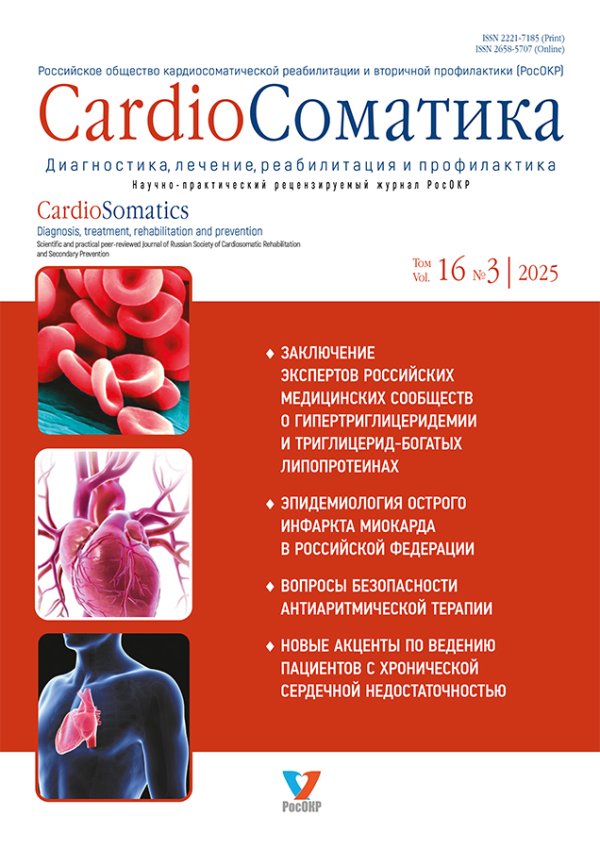
- Год: 2025
- Статей: 8
- URL: https://journal-vniispk.ru/2221-7185/issue/view/24364
- DOI: https://doi.org/10.17816/CS.2025163
Весь выпуск

Консенсусы
Гипертриглицеридемия (триглицерид-богатые липопротеины и их ремнанты): роль в развитии атеросклеротических сердечно-сосудистых заболеваний и стратегия контроля. Заключение Комитета экспертов Российского кардиологического общества (РКО), Национального общества по изучению атеросклероза (НОА), Российского общества кардиосоматической реабилитации и вторичной профилактики (РосОКР)
Аннотация
В представленном экспертном документе обсуждается проблема высокой распространённости сердечно-сосудистых заболеваний (ССЗ), обусловленных атеросклерозом. Сегодня очевидно, что причины и генез атеросклеротических ССЗ (АССЗ) не всегда можно объяснить с позиции нарушения липидного обмена, основанного исключительно на липопротеинах низкой плотности (ЛНП). В последние годы наблюдается рост количества исследований, посвящённых гипертриглицеридемии (ГТГ), обсуждаются механизмы ее формирования и значимость в атеротромбогенезе. В этой связи возникает необходимость актуализации ключевых вопросов, определяющих первопричину развития АССЗ при ГТГ и роль компонентов триглицерид-богатых липопротеинов (ТГ-богатых ЛП) и их ремнантов в этом процессе. К настоящему времени завершены эпидемиологические и генетические исследования, свидетельствующие о причинно-следственной связи ГТГ с развитием АССЗ независимо от уровня холестерина (ХС) ЛНП; определена значимость ТГ-богатых ЛП в формировании высокого остаточного сердечно-сосудистого риска на фоне контроля уровня ХС ЛНП; получены доказательства профилактической пользы при снижении повышенного уровня ТГ в крови.
 192-218


Оригинальные статьи
Влияние стимуляции α2-адренорецепторов на изолированное сердце крыс после острого инфаркта миокарда
Аннотация
Обоснование. α2-Адренорецепторы (α2-AР) представляют семейство рецепторов, связанных с G-белком. Они располагаются на пресинаптических мембранах адренергических волокон, на постсинаптических мембранах кардиомиоцитов, кровеносных сосудах, в периферической и центральной нервной системе, кишечном и почечном эпителии, в сарколемме кардиомиоцитов. Показаны кардиопротекторные свойства миокардиальных α2-AР. Однако мало что известно о конкретном вкладе α2-AР в реакции сердечной мышцы при инфаркте.
Цель — изучить влияние стимуляции α2-AР на параметры работы изолированного сердца крыс с моделью острого инфаркта миокарда.
Методы. В эксперименте использовались 48 беспородных крыс в возрасте 100–120 дней, средняя масса тела которых составила 200–250 г. Инфаркт миокарда формировали путём наложения лигатуры на левую нисходящую коронарную артерию. Эксперименты ex vivo проводили на изолированном сердце. Для изучения влияния стимуляции α2-AР использовали клонидин гидрохлорид в концентрациях 10−9 М и 10−6 М.
Результаты. Активация α2-АР (10−9 М, 10−6 М) выявила противоположные эффекты в параметрах работы изолированного сердца: увеличение давления, развиваемого левым желудочком, и коронарного потока у ложнооперированных и крыс с острым инфарктом миокарда, и уменьшение — у здоровых животных. Частота сердечных сокращений при стимуляции α2-АР уменьшалась во всех группах, тогда как у здоровых крыс агонист α2-АР (10−6 М) оказывал разнонаправленное изменение. Стимуляция α2-АР (10−9 М) уменьшала длительность сокращения, увеличение длительности расслабления и длительности цикла сокращения миокарда левого желудочка у здоровых и ложнооперированных крыс и оказывала разнонаправленные изменения у крыс с острым инфарктом миокарда. Активация α2-АР (10−6 М) изменяла разнонаправленно длительность сокращения, расслабления и длительность цикла сокращения миокарда левого желудочка у здоровых крыс. Клонидин гидрохлорид (10−6 М) не изменял длительность сокращения и увеличивал длительность расслабления и длительность цикла сокращения у ложнооперированных крыс и крыс с острым инфарктом миокарда.
Заключение. Активация α2-АР в группе крыс с острым инфарктом миокарда изменяет направленность динамики давления, развиваемого левым желудочком, и коронарного потока, уменьшает частоту сердечных сокращений и оказывает разнонаправленное влияние на скоростно-временные характеристики миокарда левого желудочка.
219-229
Обзоры
Возможности контроля безопасности антиаритмической терапии: современное состояние проблемы (обзор литературы)
Аннотация
Антиаритмическая терапия сопряжена с высоким риском развития побочных эффектов, среди которых выделяют экстракардиальные и кардиальные (в т.ч. проаритмические) осложнения, а также осложнения, связанные с межлекарственными взаимодействиями. В настоящее время для контроля безопасности при приёме антиаритмических препаратов (ААП) проводят мониторинг параметров электрокардиограммы, функций печени, почек, щитовидной железы и лёгких, а также выявление кардиологической патологии, в т.ч. скрытых нарушений проводящей системы сердца (например, синдром врождённого удлинения интервала Q–T). Однако данные подходы не всегда позволяют избежать нежелательных лекарственных реакций. Проводился отбор литературы по базам данных PubMed и eLibrary в период с января 2019 по декабрь 2024 года (в ряде случаев, в связи с ограниченным количеством источников, диапазон увеличивался). Глубина поиска источников — с 1979 по 2024. В настоящем обзоре представлены современные подходы к контролю безопасности наиболее часто назначаемых в клинической практике ААП IC класса (пропафенон, лаппаконитина гидробромид и диэтиламинопропионилэтоксикарбониламинофенотиазин), а также III класса (амиодарон и соталол). Описаны перспективы применения терапевтического лекарственного мониторинга ААП и оценки генных полиморфизмов.
230-239
Ключевые изменения клинических рекомендаций по ведению пациентов с хронической сердечной недостаточностью
Аннотация
Хроническая сердечная недостаточность (ХСН) становится всё более актуальной проблемой в контексте глобального старения населения и определённых достижений системы здравоохранения. В статье анализируются ключевые изменения клинических рекомендаций Европейского общества кардиологов и Российского кардиологического общества по ведению пациентов с ХСН, включая обновлённую классификацию и терапевтические подходы. Поиск литературных источников проведён в электронных базах данных Pubmed, Google Scholar, eLibrary.ru. Новая классификация направлена на улучшение профилактики ХСН, а не только на корректный выбор тактики терапии существующего заболевания. Обсуждается роль ингибиторов натрий-глюкозного котранспортёра 2-го типа, ангиотензиновых рецепторов и неприлизина ингибиторов, а также освещается место нового антагониста минералкортикоидных рецепторов — финеренона. Обобщение последних исследований и экспертного опыта обеспечивает специалистов современными знаниями о лечении ХСН. Однако наиболее важный аспект обновлённых рекомендаций — превентивный подход, направленный на предотвращение развития ХСН. Актуальные данные могут быть полезны как для врачей первичного звена, так и для врачей, оказывающих медицинскую помощь в условиях стационара, врачей-исследователей и позволят повысить качество и улучшить результаты лечения пациентов.
240-249
Эпидемиология острого инфаркта миокарда в Российской Федерации и за рубежом в период с 2017 по 2024 гг.
Аннотация
Острый инфаркт миокарда (ОИМ) является актуальной проблемой здравоохранения во всех странах мира. Цель настоящего нарративного обзора — поиск и систематизация результатов эпидемиологических исследований заболеваемости ОИМ в России и за рубежом. Выполнен поиск российских и зарубежных публикаций в базах данных eLibrary.ru, PubMed, Google Академия. Глубина поиска составила 5 лет. Установлено, что заболеваемость ОИМ в популяции России за анализируемый период на 100 тыс. населения была высокой и имела тенденцию к росту к 2022 г. (140,8 чел.), однако была ниже таковой по сравнению с некоторыми странами СНГ (Республика Беларусь — 174,5 чел.) и Европы (Швеция — 288,0 чел, Великобритания — 288,0 чел., Франция — 180,2 чел., Венгрия — 177,5 чел., Испания — 169,0 чел., Кипр — 160,0 чел.), а также в Новой Зеландии — 536,0 чел., США — 439,85 чел., Японии — 389,7 чел., Австралии — 352,0 чел., Иране — 343,0 чел., Китае — 231,6 чел., Танзании — 172,0 чел. Из представленных данных следует, что заболеваемость ОИМ высока в России и за рубежом с тенденцией к росту в популяции лиц среднего возраста. Это объясняет необходимость проведения российских мультицентровых эпидемиологических исследований заболеваемости ОИМ в возрастной категории от 45 до 59 лет в будущем для возможности разработки новых диагностических и терапевтических стратегий.
263-274
Аспросин в роли нового биологического маркёра атеросклероза и нарушений углеводного обмена
Аннотация
Сердечно-сосудистые заболевания представляют собой глобальную медицинскую, социальную и экономическую проблему. В настоящее время ведётся активный поиск новых биологических маркёров и терапевтических мишеней с целью разработки эффективных подходов к стратификации риска и вторичной профилактике сердечно-сосудистой патологии. Несмотря на идентификацию множества сердечно-сосудистых биомаркёров, их внедрение в медицинскую практику до сих пор остаётся в значимой степени безуспешным. В последнее время исследователи активно изучают аспросин. Основной целью данной статьи является анализ существующих исследований, посвящённых роли аспросина в качестве биомаркёра при атеросклерозе и нарушениях углеводного обмена. Всё большее количество экспериментальных работ свидетельствует о том, что данный биомаркёр участвует в развитии и усилении выраженности атеросклероза, сахарного диабета, ожирения и синдрома поликистозных яичников. Аспросин регулирует различные процессы, такие как стимуляция аппетита, высвобождение глюкозы, секреция инсулина, апоптоз и воспаление. На основании полученных данных клинических исследований можно заключить, что аспросин представляет собой перспективную молекулу, обладающую как диагностической, так и прогностической ценностью в контексте атеросклероза и нарушений углеводного обмена. Необходимы дополнительные исследования, направленные на изучение аспросина как дополнительного лабораторного инструмента. Регулирование концентрации и экспрессии аспросина может стать многообещающей стратегией для лечения пациентов с атеросклерозом и расстройствами углеводного обмена.
250-262
Клинические случаи
Кардиомиопатия на фоне некомпактного миокарда у пациента с декстрокардией: клинический случай
Аннотация
Обоснование. Сочетание кардиомиопатии и декстрокардии представляет значительный клинический интерес в связи с редкостью и сложностью патогенеза, который может быть связан с общими нарушениями эмбриогенеза. Проведён анализ клинического случая пациента 45 лет с декстрокардией, госпитализированного в кардиологическое отделение. Использованы данные физикального осмотра, лабораторных (общий и биохимический анализы крови, мочи) и инструментальных (эхокардиография, электрокардиография, рентгенография органов грудной клетки, магнитно-резонансная томография сердца) методов исследования.
Описание клинического случая. В статье освещены современные данные об этиологии, генетических аспектах и клинических проявлениях этих заболеваний. Особое внимание уделено смешанной этиологии, при которой взаимодействие генетических мутаций (более 1400 идентифицированных генов, включая гены саркомерных белков) с экзогенными факторами (токсины, воспаление, метаболические нарушения) усложняет патогенез и клиническое течение. Примером такого сочетанного поражения является клинический случай с редкой анатомической аномалией — декстрокардией, при которой сердце расположено в правой половине грудной клетки. Данное сочетание встречается довольно редко в современном мире, поэтому необходимо акцентировать внимание на комплексной диагностике, учитывающей генетические, экологические и коморбидные факторы, а также на междисциплинарном подходе для улучшения прогноза и качества жизни пациентов.
Заключение. Представленный случай подчёркивает важность тщательной диагностики, включая современные методы визуализации (магнитно-резонансная томография), для выявления специфических фенотипов кардиомиопатии (некомпактный миокард левого желудочка) у пациентов с редкими анатомическими аномалиями. Комплексный индивидуальный подход позволяет успешно применять стандартные схемы терапии и добиваться положительных результатов. Показана целесообразность дальнейшего генетического тестирования.
275-283
Клинический случай «коралловой аорты», потребовавший сложной дифференциальной диагностики, с успешным консервативным ведением
Аннотация
Обоснование. «Коралловая аорта» — редкое состояние, вызванное атеросклеротическим процессом в аорте чрезмерной выраженности, что приводит к повреждению внутренних органов и развитию жизнеугрожающих состояний. Для практических врачей важна осведомлённость о данном заболевании для его своевременного выявления.
Описание клинического случая. Представляемый случай интересен развитием у пациентки пожилого возраста редкого осложнения «коралловой аорты» — отёка лёгких. Особенности клинической картины и данные результатов обследования потребовали проведения дифференциальной диагностики с острым коронарным синдромом, тромбоэмболией лёгочной артерии и острым нарушением мозгового кровообращения. В отличие от большинства других опубликованных наблюдений, для больной была выбрана консервативная тактика ведения. Судьба пациентки прослежена на протяжении двух лет после выписки.
Заключение. В связи с редкостью патологии и малым количеством литературных данных имеются трудности диагностики этого состояния. Своевременное выявление «коралловой аорты» позволяет провести оперативное лечение прежде развития выраженных симптомов, органных поражений или жизнеугрожающего состояния. Другим направлением ведения больных с «коралловой аортой» является вторичная профилактика атеросклероза путём коррекции факторов риска. Посредством назначения адекватной медикаментозной терапии возможно замедлить прогрессирование заболевания и сохранить функции внутренних органов.
284-293