





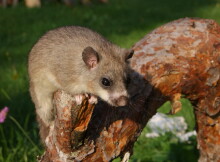
FEATURES OF THE DISTRIBUTION OF THE DORMOUSE (GLIS GLIS) ON THE PERIPHERY OF ITS RANGE (USING THE EXAMPLE OF BROADLEAF AND CONIFEROUS-BROADLEAF FORESTS IN THE NIZHNY NOVGOROD REGION)
- Authors: Shchegolkov A.V.1, Yakimov V.N.2, Krivonogov D.M.1, Orlov V.N.3
-
Affiliations:
- Lobachevsky State University of Nizhny Novgorod (Arzamas Branch)
- Lobachevsky State University of Nizhny Novgorod
- Severtsov Institute of Ecology and Evolution, Russian Academy of Sciences
- Issue: No 3 (2025)
- Pages: 1-14
- Section: Articles
- URL: https://journal-vniispk.ru/2500-0578/article/view/356366
- DOI: https://doi.org/10.21685/2500-0578-2025-3-3
- ID: 356366
Cite item
Full Text

Abstract
The dormouse is a specialized dendrophilous species, favoring broadleaf forests. A large number of dormouse habitats on the East European Plain have been reduced due to intensive economic activity. As a result, the dormouse is listed in the Red Data Books of 13 regions of the Russian Federation. The aim of this study was to identify factors influencing the presence (or absence) of the dormouse in the forests of the Nizhny Novgorod Region at the northern boundary of its range. Using artificial nests, 25 fragments of broadleaf and mixed-coniferous forests in 11 districts of the Nizhny Novgorod Region were surveyed from 2014 to 2024. The analysis showed that dormice are found only in relict old-growth forests 200 years old or more, avoiding oak forests 150-200 years old. Their presence is influenced by factors such as forest type, stand density, and canopy density. The structure of forest layers is also important. A well-developed understory with a high proportion of common hazel, as well as oak and linden, is essential. No correlation was found between forest fragment size and soil type. The obtained results indicate the need to protect fragments of primary old-growth broadleaf forests, which contain a set of specific characteristics that play a key role in maintaining a stable dormouse population on the northern periphery of its range.
About the authors
A. V. Shchegolkov
Lobachevsky State University of Nizhny Novgorod (Arzamas Branch)
Author for correspondence.
Email: mister.shegolkov@yandex.ru
Arzamas, Russia
V. N. Yakimov
Lobachevsky State University of Nizhny Novgorod
Email: damselfly@yandex.ru
Nizhny Novgorod, Russia
D. M. Krivonogov
Lobachevsky State University of Nizhny Novgorod (Arzamas Branch)
Email: deniskrivonogov@mail.ru
Arzamas, Russia
V. N. Orlov
Severtsov Institute of Ecology and Evolution, Russian Academy of Sciences
Email: orlovvic@yandex.ru
Moscow, Russia
References
- Ayrapet′yants A.E. Soni. Seriya: Zhizn′ nashikh ptits i zverey = Dormice. Series: The life of our birds and animals. Leningrad: Izd-vo Leningr. un-ta, 1983;(5):192. (In Russ.)
- Geptner V.G. Sonya-polchok = Dormouse. Moscow; Leningrad: Vneshpromizdat, 1932:36. (In Russ.)
- Vekhnik V.A. Reproductive strategy of the dormouse (Glis glis L., 1766) on the outskirts of its range: PhD dissertation. Tol′yatti, 2010:145. (In Russ.)
- Vekhnik V.A. Dormouse (Glis glis, Gliridae, Rodentia) on the outskirts of its range: body size and life cycle parameters. Zoologicheskiy zhurnal = Zoological journal. 2017;96(5):569–580. (In Russ.)
- Vekhnik V.A. Comparative analysis of biology and ecology of Glis Glis (Gliridae, Rodentia) in the Zhiguli Nature Reserve (Russia) and beyond. Nature Conservation Research. Zapovednaya nauka = Nature Conservation Research. 2020;(5):1–20. (In Russ.)
- Vekhnik V.A., Vekhnik V.P. Experience in studying the biology of dormice (Glis glis: Gliridae, Rodentia) using artificial nests. Nature Conservation Research. Zapovednaya nauka = Nature Conservation Research. 2018;(3):86– 91. (In Russ.)
- Krivonogov D.M., Shchegol′kov A.V., Dmitriyev A.I., Orlov V.N. Habitat fragmentation of two species of snow leopards (Gliridae, Rodentia) and protection of biodiversity of broadleaf forests in the Nizhny Novgorod region. Povolzhskiy ekologicheskiy zhurnal = Volga Region Ecological Journal. 2019;(2):237–252. (In Russ.)
- Lisovskiy A.A., Stakheyev V.V., Savel′yev A.P. et al. Atlas rasprostraneniya melkikh mlekopitayushchikh yevropeyskoy chasti Rossii = Atlas of the distribution of small mammals in the European part of Russia. Moscow: Tovarishchestvo nauchnykh izdaniy KMK, 2025:448. (In Russ.)
- Morris P.A. A review of research on British dormice (Gliridae) and the effect of increasing public and scientific awareness of these animals. Acta Zoologica Academiae Scientiarum Hungaricae. 2003;49 (Suppl. 1):125–130.
- Morris P.A., Morris M.J. A 13-year population study of the edible dormouse Glis glis in Britain. Acta Theriologica. 2010;(55):279–288.
- Worschech K. Dispersal movements of edible dormice Glis glis between small woods in a fragmented landscape in Thuringia (Germany). Peckiana. 2012;8:173–179.
- Juškaitis R. Abundance dynamics of Common dormouse (Muscardinus avellanarius), Fat dormouse (Glis glis) and Yellow-necked mouse (Apodemus flavicollis) derived from nestbox occupation. Folia Theriologica Estonica. 2000;5:42–50.
- Schlund W., Scharfe F., Stauss M.J., Burkhardt J.F. Habitat fidelity and habitat utilization of an arboreal mammal (Myoxus glis) in two different forests. Z. Säugetierkunde. 1997;(62):158–171.
- Capizzi D., Battistini M., Amori G. Effects of habitat fragmentation and forest management on the distribution of the edible dormouse Glis glis. Acta Theriologica. 2003;(48):359–371.
- Marteau M., Maurizio S. Habitat preferences of edible dormouse, Glis glis italicus: implications for the management of arboreal mammals in Mediterranean forests. Folia Zool. 2015;(64):136–150.
- Bieber S. Dispersal behaviour of the Edible Dormouse (Myoxus glis L.) in a fragmented landscape in Central Germany. Hystrix-italian Journal of Mammalogy. 1995;(6):257–263.
- Smirnova O.V., Chistyakova A.A., Zaugol′nova L.B. et al. Diagnozy i klyuchi vozrastnykh sostoyaniy lesnykh rasteniy. Derev′ya i kustarniki: metodicheskiye razrabotki dlya studentov biologicheskikh spetsial′nostey = Diagnoses and age-related keys for forest plants. Trees and shrubs: teaching materials for students majoring in biology. Moscow: Izd-vo «Prometey» MGPI im. V.L. Lenina, 1989:102. (In Russ.)
- Krasnaya kniga Nizhegorodskoy oblasti. Tom 1. Zhivotnyye. 2-e izd., pererab. i dop. = Red data book of the Nizhny Novgorod Region. Volume 1. Animals. 2nd edition, revised and expanded. Nizhniy Novgorod: DEKOM, 2014:448. (In Russ.)
- Yurkovskaya T.K. Vegetation map. Natsional′nyy atlas pochv Rossiyskoy Federatsii = National soil atlas of the Russian Federation. Moscow: Astrel′, 2011:46–47. (In Russ.)
- Bakka S.V., Kiseleva N.Yu. Osobo okhranyayemyye prirodnyye territorii Nizhegorodskoy oblasti. Annotirovannyy perechen′ = Specially protected natural areas of the Nizhny Novgorod Region. Annotated list. Nizhniy Novgorod, 2008:560. (In Russ.)
- Artashev O.N., Bashmakov D.I., Bezina O.V. et al. Metody polevykh ekologicheskikh issledovaniy: ucheb. posobiye = Methods of field environmental research: a textbook. Saransk: Izd-vo Mordov. un-ta, 2014:412. (In Russ.)
- Tikhodeyeva M.Yu., Lebedeva V.Kh. Prakticheskaya geobotanika (analiz sostava rastitel′nykh soobshchestv): ucheb. posobiye = Practical geobotany (Analysis of the composition of plant communities): Textbook. Saint Petersburg: Izd-vo S.-Peterb. un-ta, 2015:166. (In Russ.)
- Ipatov V.S., Kirikova L.A. Fitotsenologiya: uchebnik = Phytocenology: textbook. Saint Petersburg: Izd-vo S.-Peterburg. un-ta, 1997:316. (In Russ.)
- Borisova M.A., Bogachev V.V. Geobotanika: ucheb. posobiye = Geobotany: a textbook. Yaroslavl: Yarosl. gos. un-t im. P.G. Demidova, 2009:160. (In Russ.)
- Likhachev G.N. Mouse-like rodents and artificial nests for birds. Zool. zhurn. = Zoological journal. 1955;(34): 160–175. (In Russ.) 26. Krystufek V., Zavodnik M. Autumn population density of the edible dormouse (Glis glis) in the mixed montane forest of Central Slovenia over 33 years. Acta Zool. Academiae Scientiarum Hungaricae. 2003;49:99–108.
- Pilastro A., Marin G., Tavecchia G. Long living and reproduction skipping in the fat dormouse. Ecology. 2003;84:1784–1792.
- Adamik P., Kral M. Climate- and resource-driven long-term changes in dormice populations negatively affect holenesting songbirds. Journal of Zoology. 2008;(275):209–215.
- Lebl K., Bieber C., Adamik P. et al. Survival rates in a small hibernator, the edible dormouse: a comparison across Europe. Ecography Subject. 2010;October:1–10.
- Firth D. Bias reduction of maximum likelihood estimates. Biometrika. 1993;(80):27–38.
- Büchner S. Dispersal of common dormice Muscardinus avellanarius in a habitat mosaic. Acta Theriologica. 2008;(53):259–262.
- Negro M., Novara C., Bertolino S., Rolando A. Ski-pistes are ecological barriers to Glis glis and other forest small mammals. 8th Inter. Dormouse Conf. Abstract Book. Görlitz: DFG, 2011:3–5.
- Gromov I.M., Yerbayeva M.A. Mlekopitayushchiye fauny Rossii i sopredel′nykh territoriy. Zaytseobraznyye i gryzuny = Mammals of the fauna of Russia and adjacent territories. Lagomorphs and rodents. Saint Petersburg, 1995:522. (In Russ.)
- Rossolimo O.L., Potapova E.G., Pavlinov I.Ya. et al. Soni (Myoxidae) mirovoy fauny = Dormice (Myoxidae) of the world fauna. Moscow: Izd-vo Moskovskogo universiteta, 2001:229. (In Russ.)
- Thompson H.V. The Edible Dormouse (Glis glis L.) in England, 1902–1951. Proc. Zool. Soc. 1953;122:1017–1025.
- Juškaitis R., Šiožinytė V. Habitat requirements of the common dormouse (Muscardinus avellanarius) and the fat dormouse (Glis glis) in mature mixed forest in Lithuania. Ekológia (Bratislava). 2008;27(2):143–151.
- Fietz J., Pflug M., Schlund W., Tataruch F. Influences of the feeding ecology on body mass and possible implications for reproduction in the edible dormouse (Glis glis). J. Somp. Physiol. 2005;175:45–55.
- Gigirey A., Rey J.M. Autumn diet of the fat dormouse in Galicia, Northwest Spain. Acta Theriologica. 1998;43: 325–328.
- Samarskiy A.S., Samarskiy S.L. Some issues of the ecology of the dormouse in the forest-steppe conditions of Ukraine. Ekologiya = Ecology. 1980;(1):105. (In Russ.)
- Spangenberg E.P. Dormouse. Pushnoye delo = Fur business. 1929;(10):34–40. (In Russ.)
- Donaurov S.S., Popov V.K., Khonyakina Z.P. Dormouse in the area of the Caucasian State Nature Reserve. Trudy Kavkazskogo gosudarstvennogo zapovednika = Proceedings of the Caucasian State Nature Reserve. 1938;(1): 227–279. (In Russ.)
- Grekova V.Kh. Dietary characteristics of the dormouse in the Northwestern Caucasus. Materialy IV nauchnoy konferentsii zoologov ped. institutov = Proceedings of the IV scientific conference of zoologists of pedagogical institutes. Gorkiy, 1970:83–84. (In Russ.)
- Averkiyev D.S., Averkiyev V.D. Opredelitel′ rasteniy Gor′kovskoy oblasti = A guide to plants of the Gorky region. Gorkiy: Volgo-Vyatskoye knizhn. izd-vo, 1985:320. (In Russ.)
- Hanski I. The shrinking world: Ecological consequences of habitat loss. Luhe: International Ecology Institute, 2005:307.
- Ray E.A., Torkhov S.V., Burova N.V. et al. Klyuchevyye biotopy lesnykh ekosistem Arkhangel′skoy oblasti i rekomendatsii po ikh okhrane = Key biotopes of forest ecosystems in the Arkhangelsk region and recommendations for their protection. Arkhangelsk, 2008:30. (In Russ.)
Supplementary files

